Gamified User Journey for Health Tracking
Overview
Brief details about the project
Problem statement
The Eli app was initially launched to help users track symptoms, and build healthy habits. However, over time, user feedback and declining engagement metrics revealed critical pain points:
Outdated UI: The design lacked visual hierarchy and personalization.
Low Engagement: Features like symptom logging and affirmations were buried in a cluttered layout.
Ineffective Progress Tracking: Users struggled to visualize their wellness journey, leading to low motivation.
Audience Gaps: The app needed to cater to children, requiring simplified interactions.
Goal: Redesign the app to enhance usability, engagement, and inclusivity while addressing technical debt and time constraints.
Success Metric: Increase adoption of Logs and increase task completion rate by 40%
Process
Research & Analysis
Benchmark data: Only 20% of children could independently navigate to key features like logging water intake.Task abandonment rates for kids averaged 65% due to frustration.
Layout design: Collaborated with 8 families to sketch ideal layouts. Kids prioritized “big buttons” and “happy sounds.”
Competitive analysis : Analyzed apps like Khan Academy Kids, Sweat coin and Apple fitness app to adopt a unique navigation.
Prioritised Pain point: Hidden “Log your symptoms” button led to 65% task abandonment.
UI/UX Improvements
Quick-Access “Daily Actions” Card:
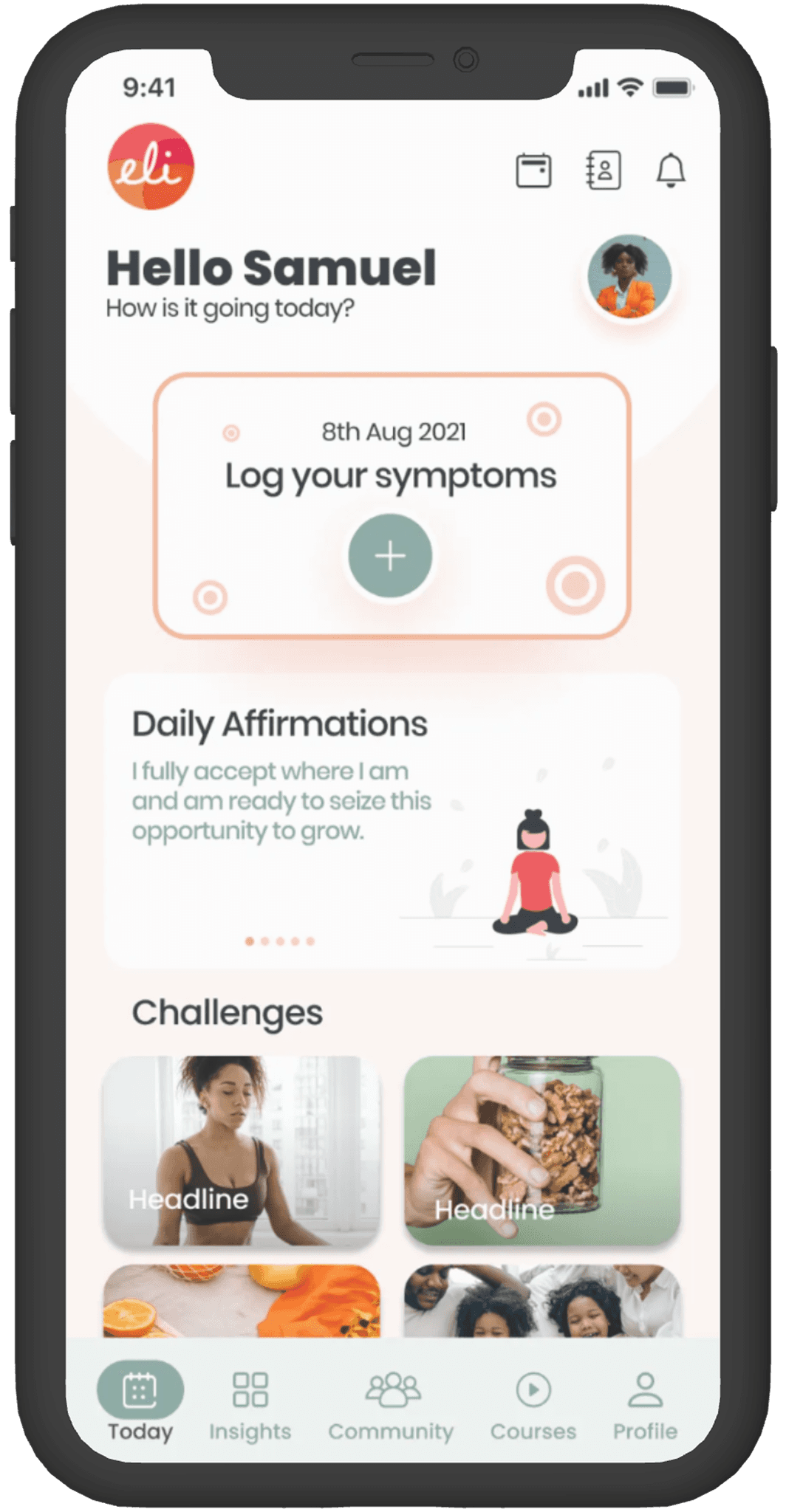
Before: A generic “Log your symptoms” prompt is hidden in the header.
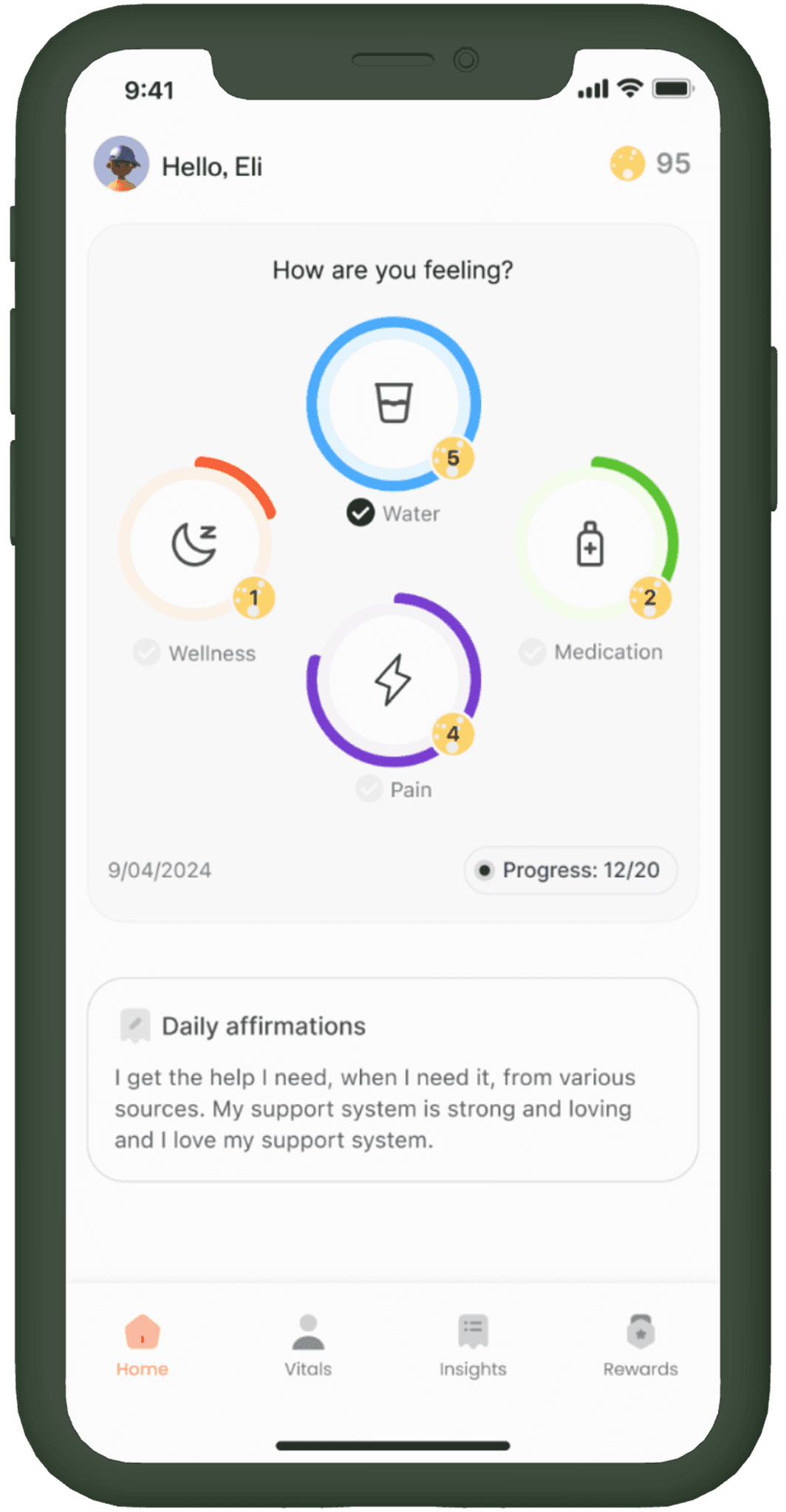
After: Reduced visual clutter and a central card with tappable buttons for Water, Pain, and Medication – each featuring:
Kid-Scaled Icons: Bold style icons (e.g., a cup of water).
Progress Gamification: “Progress: 12/20” bar with dynamic colour changes as tasks are completed.
Homepage: Before(L) , After(R)
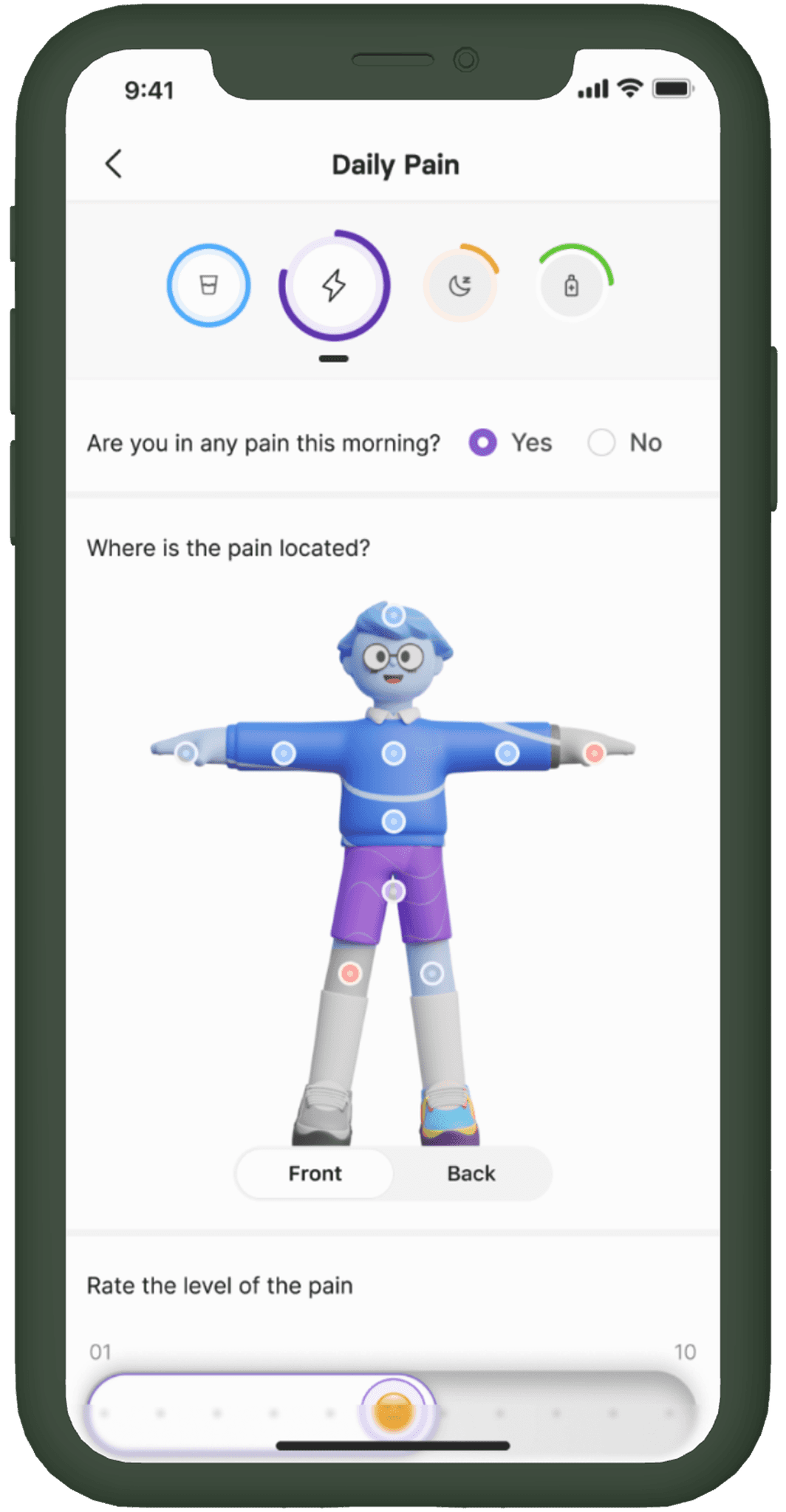
Interactive logging system:
Before: Minimal visual aids for system input with limited interactivity for kids.
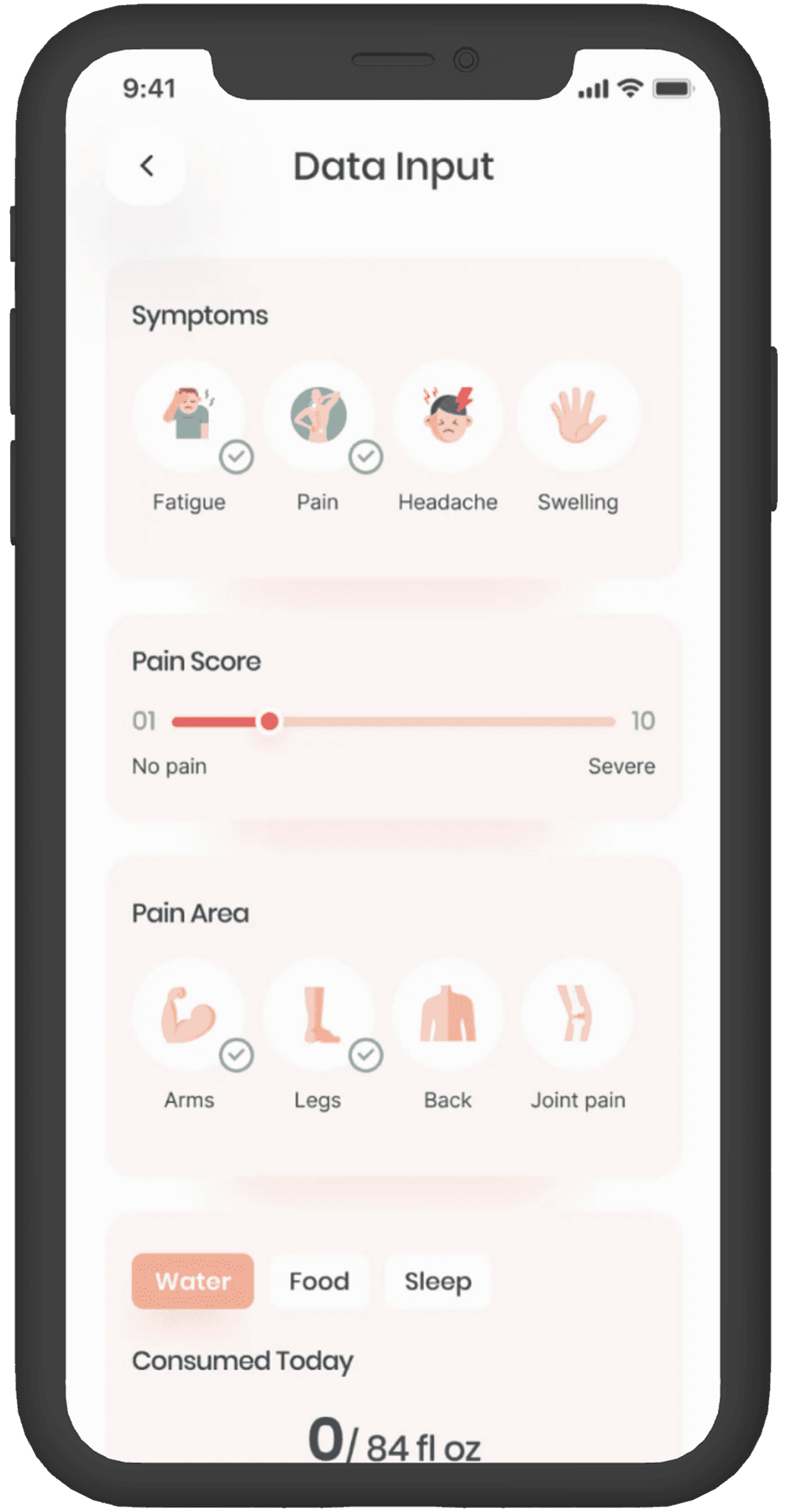
After: An intuitive and visually appealing screen to allow for engagements – featuring:
Intuitive 3D avatar for pain mapping.
Enhanced visual indicators and colour-coded selections.
Logging: Before(L) , After(R)
Challenges and Risks
Researching with Children
Risk: Children may struggle with traditional UX research methodologies.
Solution: Utilized interactive testing sessions with storytelling techniques to gather insights.
Time Constraints
Risk: Tight deadlines for design iterations and development.
Solution: Implemented rapid prototyping and agile design sprints.
Impact & Results
Measurable Improvements
User Engagement: 30% increase in daily active users after the redesign.
Task Completion Rate: Improved by 45% for symptom logging.
Retention Rate: 25% higher among new users due to gamification and improved UX.
Accessibility Rating: Achieved a WCAG AA compliance rating.
Business Outcomes
Increased customer satisfaction scores.
The higher adoption rate among families and pediatric patients.
Positive stakeholder feedback leads to additional investment in UX enhancements.
Credit
This customer issue was resolved due to the valuable contributions by other member of my team:
Dominique - Project Manager
Gen Nahurito - Engineering consultant
Funmi - Founder
Feedback
I believe that growth comes from collaboration and constructive feedback. If you have any thoughts, suggestions, or questions about this project or my approach, I would love to hear from you. Your insights could help me refine my work and continue to improve as a designer.